The curved red facade defines compactness Café by 72/8 Architects
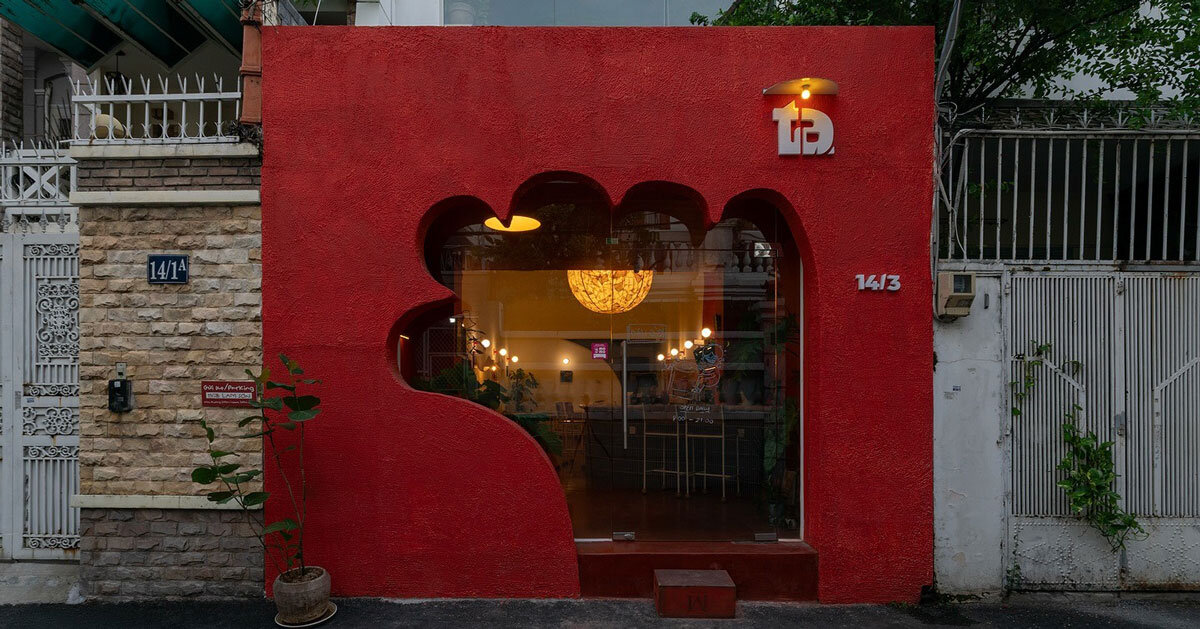
72/8 Architects completes the coffee, a compact cafe embedded in a dense residential area in Saigon, Vietnam. The project utilizes its small footprint to create a distinct architectural identity within the surrounding concrete terraced houses.
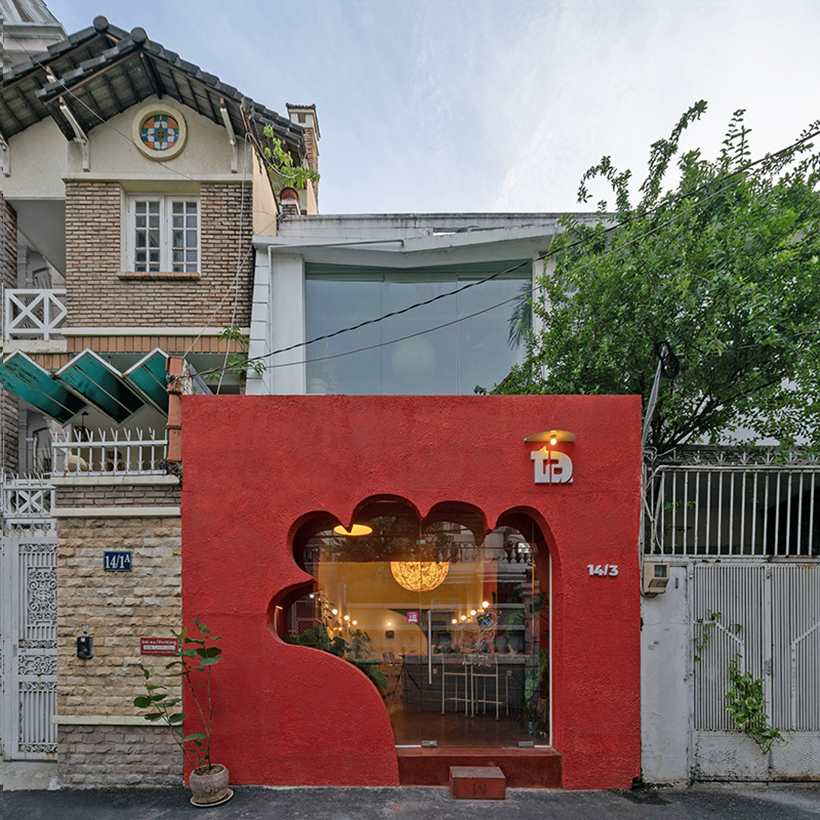
The facade introduces a curved red volume that deviates from the rigid orthogonal geometry typical of adjacent buildings. Created as a continuous, hand-like shape with soft edges, it creates a clear visual contrast while framing the view between the street and the interior. A large circular opening doubles as an entrance and shop window, allowing pedestrians to observe the hustle and bustle of the café.
All images by Kien Tran
Saturated red cement plaster forms the facade of a cafe
For studio According to 72/8 Architects, the use of a rich red finish is at the heart of the design. The surface, applied as exposed colored cement plaster, references traditional South Vietnamese materials such as lacquer and yin-yang tiles, reinterpreted through contemporary construction techniques. The color creates an immediate street presence and defines the spatial atmosphere of the interior.
Through its form and material expression, tạ Coffee presents a small architectural intervention that explores how surface treatment, geometry and color can reshape the experience of a compact urban place.
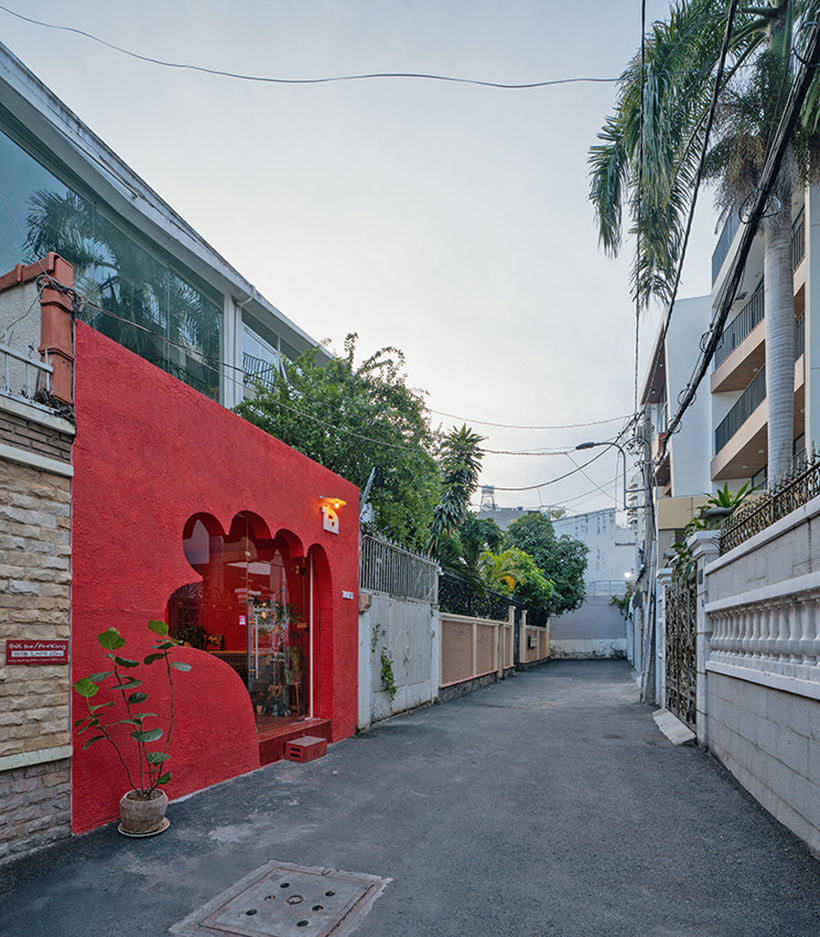
tạ Coffee occupies a compact location in the dense residential fabric of Saigon
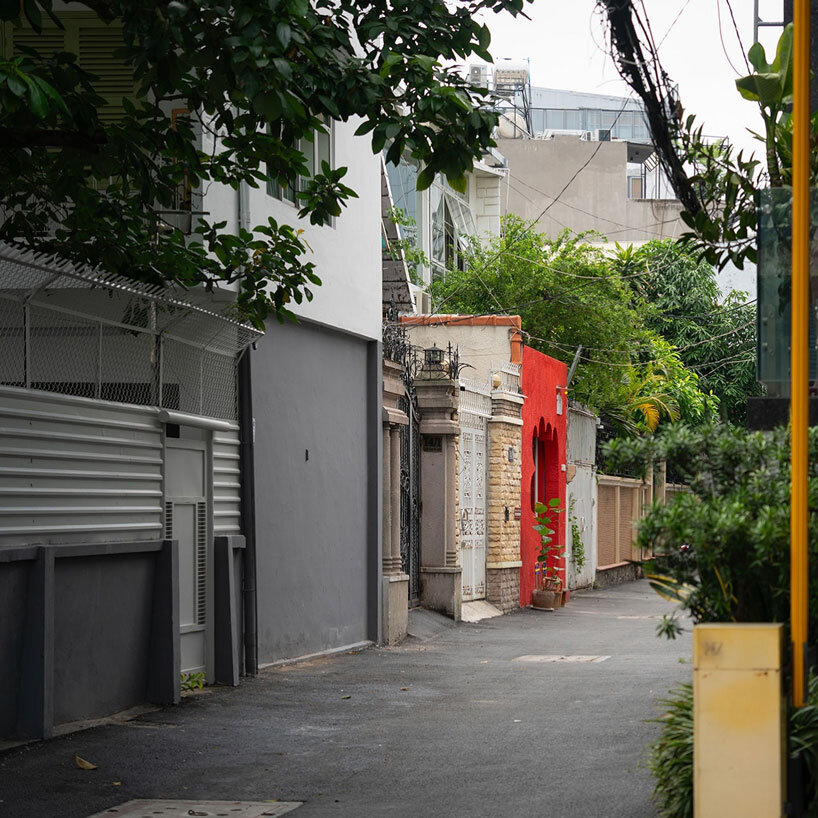
The café gives the concrete terraced houses a distinct architectural identity
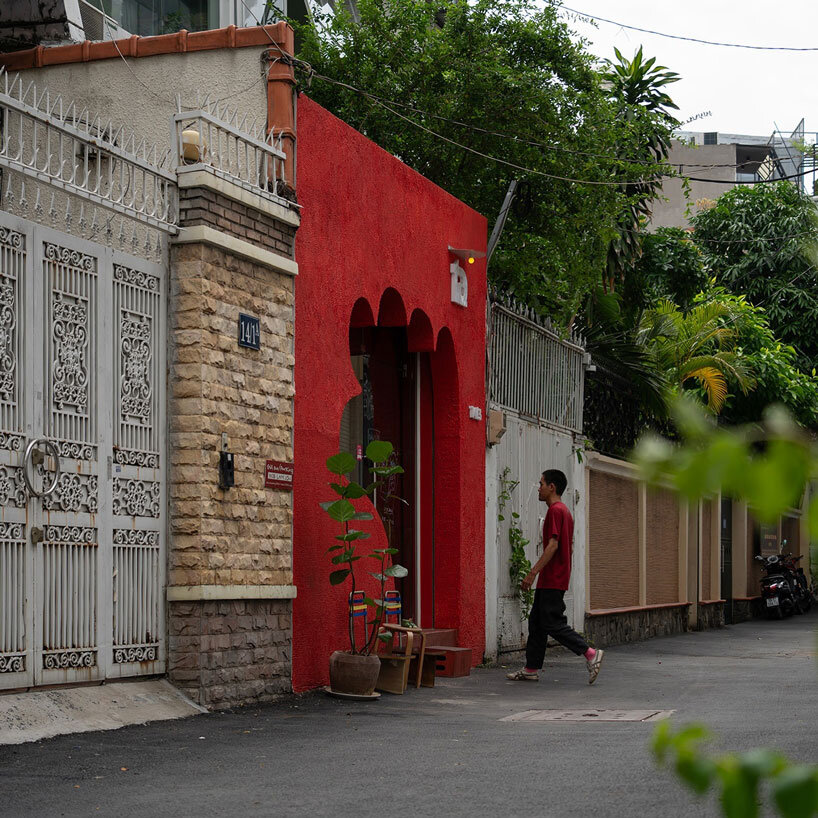
The soft-edged shape contrasts with the orthogonal geometry of neighboring buildings
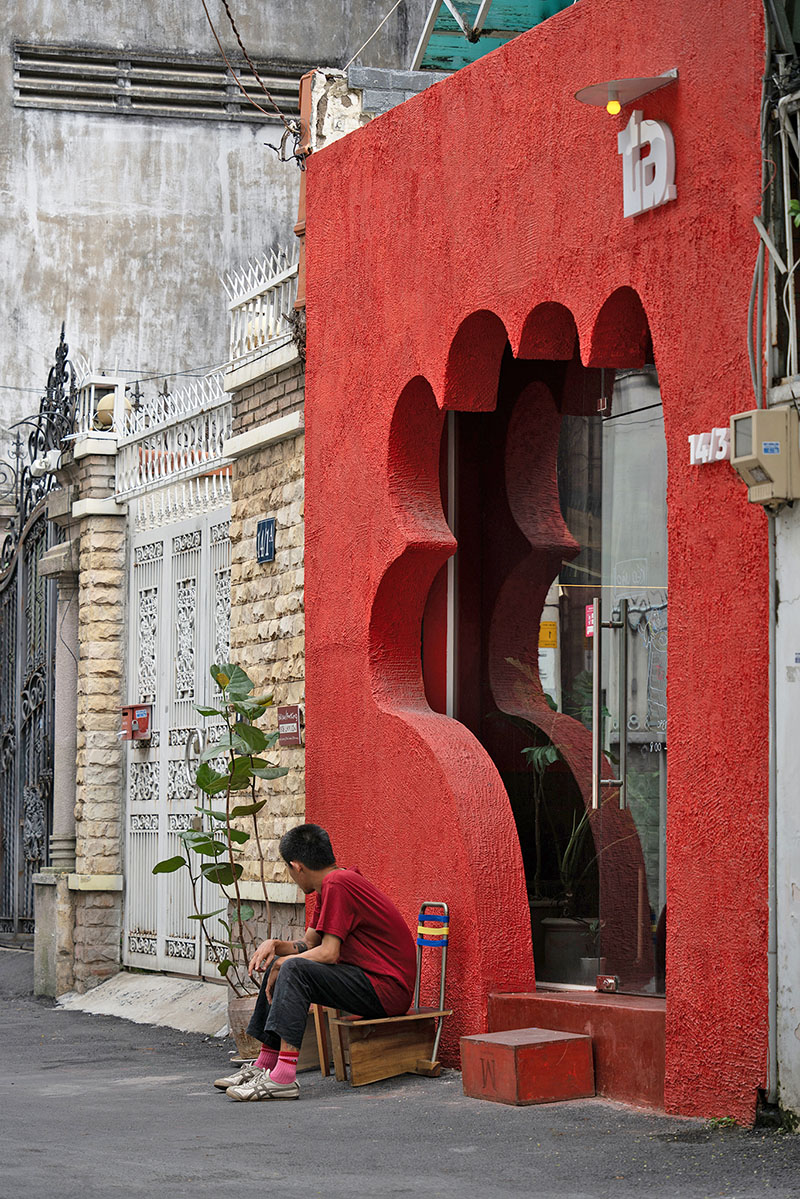
A curved red volume defines the building's facade
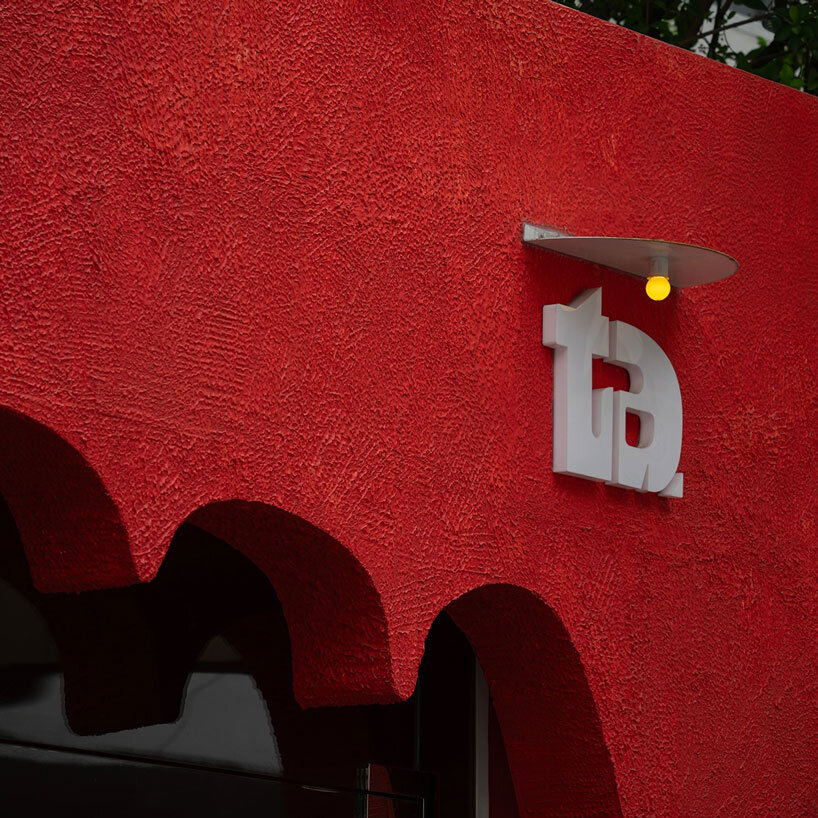
The rich red paint is applied as a colored exposed cement plaster
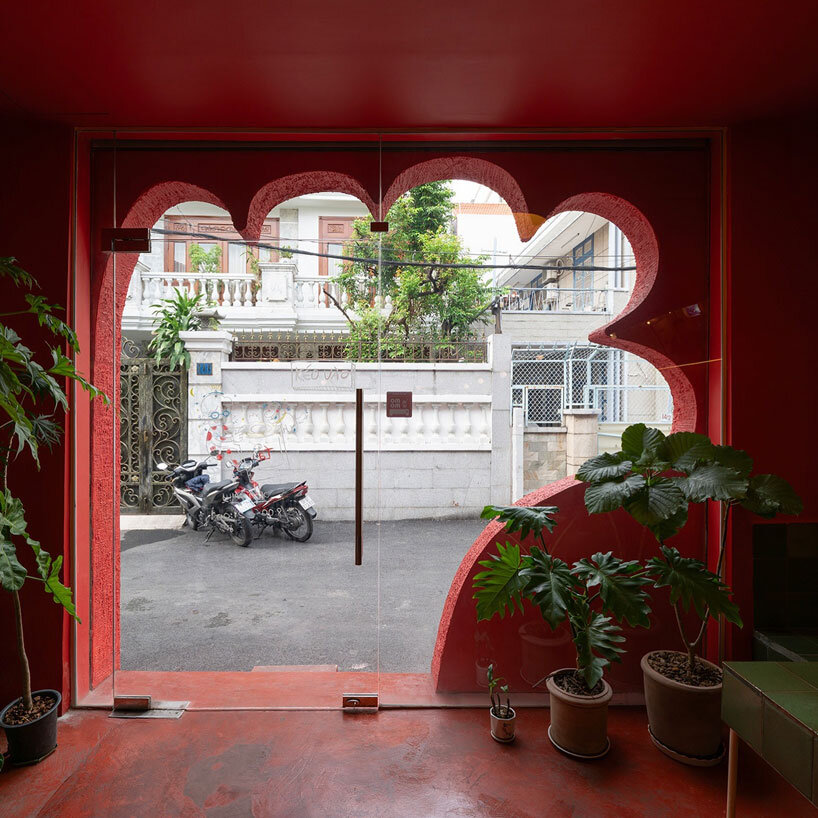
A large hand-shaped opening serves as both an entrance and a shop window
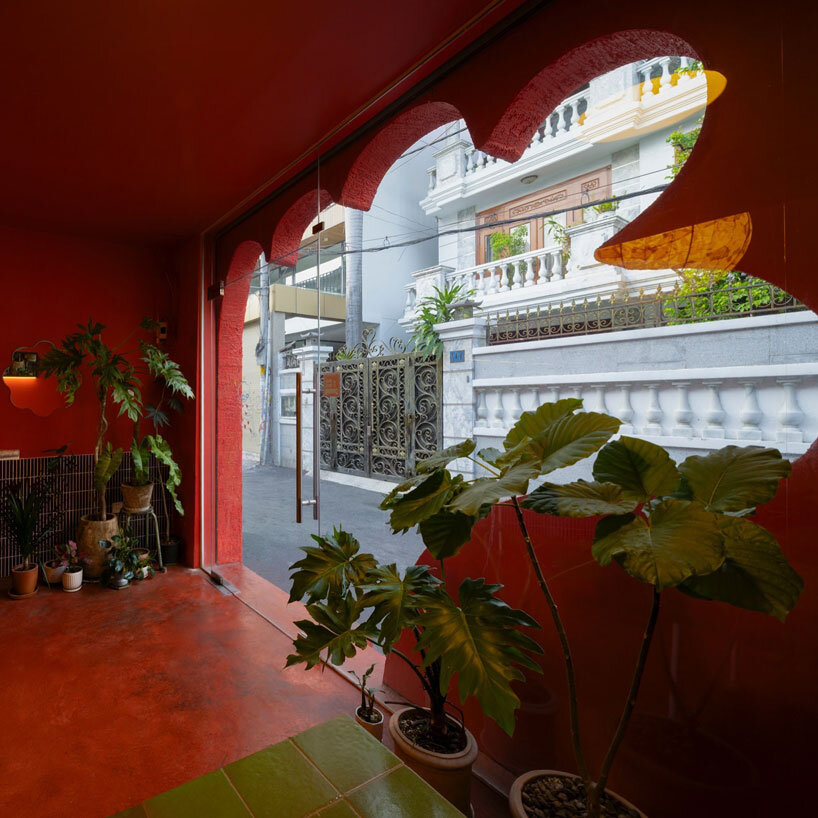
The curved shape frames the view between the street and the interior