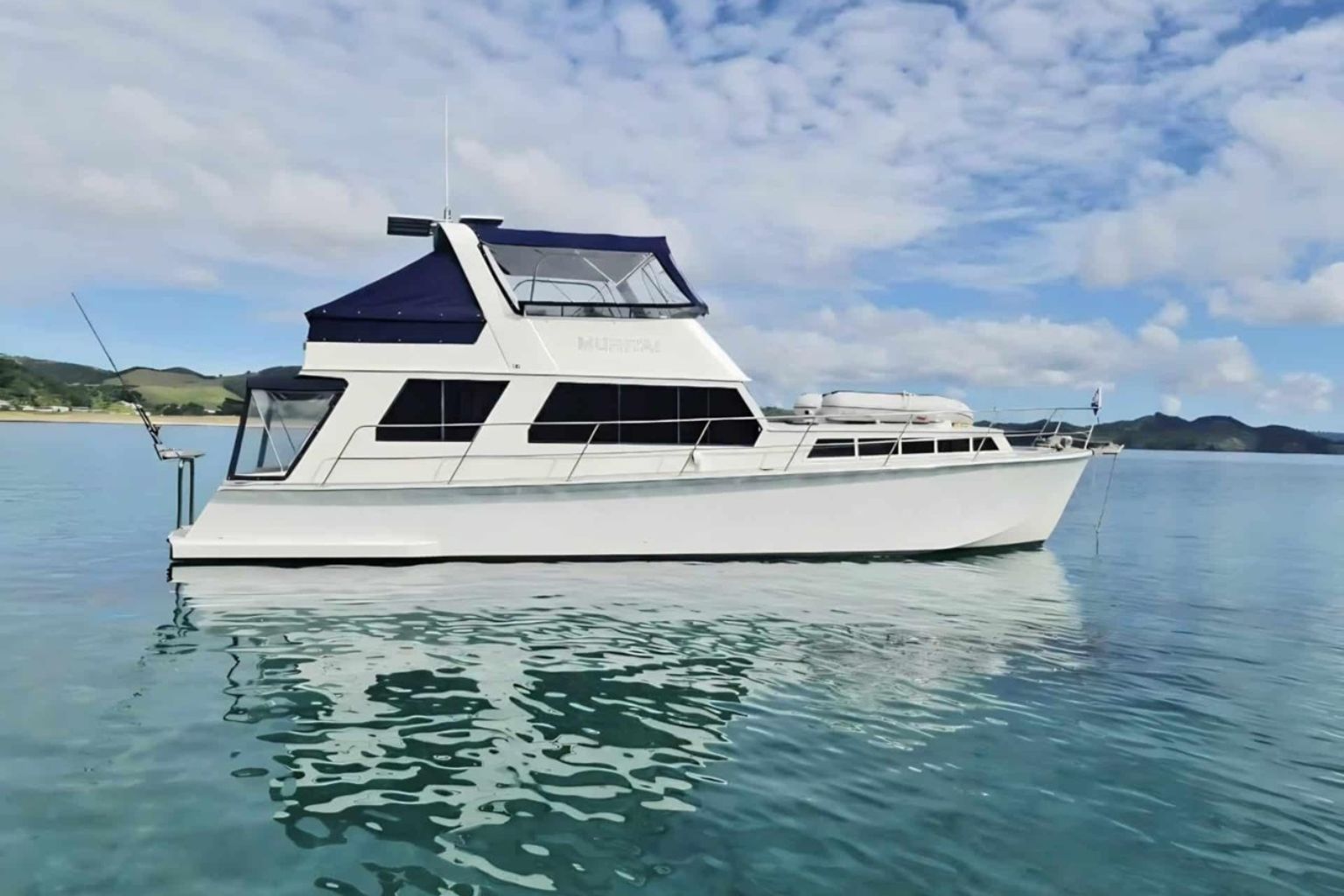
A 1965 launch by Alan Smith that brings together the best of mid-century kauri craftsmanship and coastal cruising design.
A designer who thinks beyond the norms of his time
Claude Allen Smith, known locally as Alan Smith, worked at a time of great change in New Zealand boat building. His Whangarei shipyard produced a wide range of yachts and launches, all built with a clear eye for proportion and the honest strength of the Northland kauri. While his Easterly and Planet yachts are the best known today, Later shows that Smith's approach to powerboat design was also ahead of its time.
When Smith drew Later In the mid-sixties most New Zealand barges still bore the shape and habits of the classic bridgedecker. Boats from manufacturers such as Sam Ford, Lane Motor Boat Co and Shipbuilders dominated local harbors with their tall wheelhouses, enclosed saloons and compact cockpits designed for short coastal cruising. These patterns had persisted since the 1930s. Expanded liveaboard arrangements were just beginning to emerge, and even respected family cruisers of the time adhered to the conservative interior design.

Flybridges, now a familiar sight, were still on the fringes of the design world. With “Fifty Two Foot,” Salthouse made their first real statement TrinidadLaunched in 1965 with a sophisticated top helm that attracted a lot of attention. But this was a bespoke yacht at the top end of the market. On medium-sized barges, flybridges were rare and were often added later as simple platforms rather than functional helm stations.
Put in this context, Later reads like a future-oriented boat. Their shape and arrangement give an idea of the development of New Zealand cruisers in the seventies and eighties.
A cockpit concept that was ahead of its time
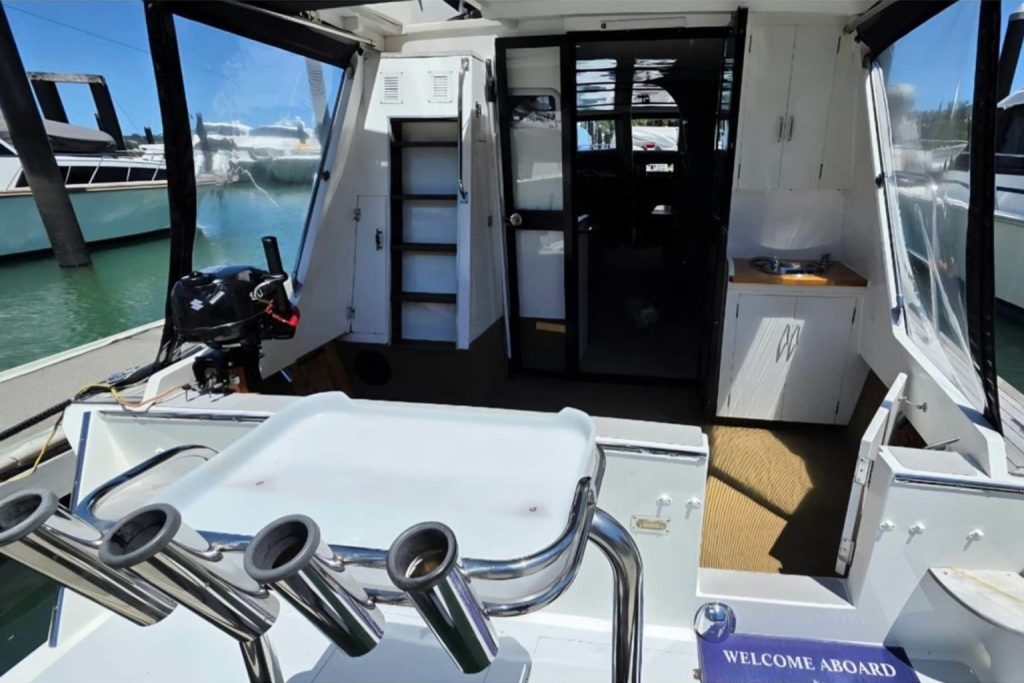
Muritais Cockpit is the first clue. It is wide, usable and suitable for people who prefer to be outside rather than in transit. An outdoor shower and sink are neatly located to one side, and weather curtains can easily screen the area. It feels like an extension of the sedan and offers the flow that wouldn't become standard until years later.
Where many 1960s product launches kept their main social space indoors, Later gave the cockpit the same weight. This change alone makes it something special for this time.
A sedan that looks remarkably current
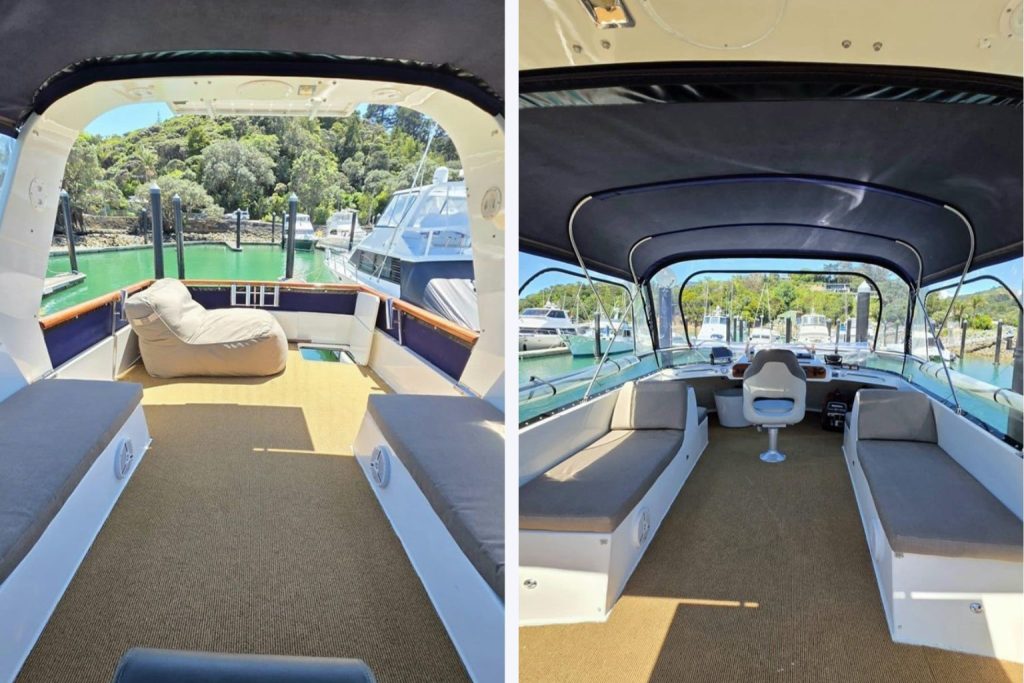
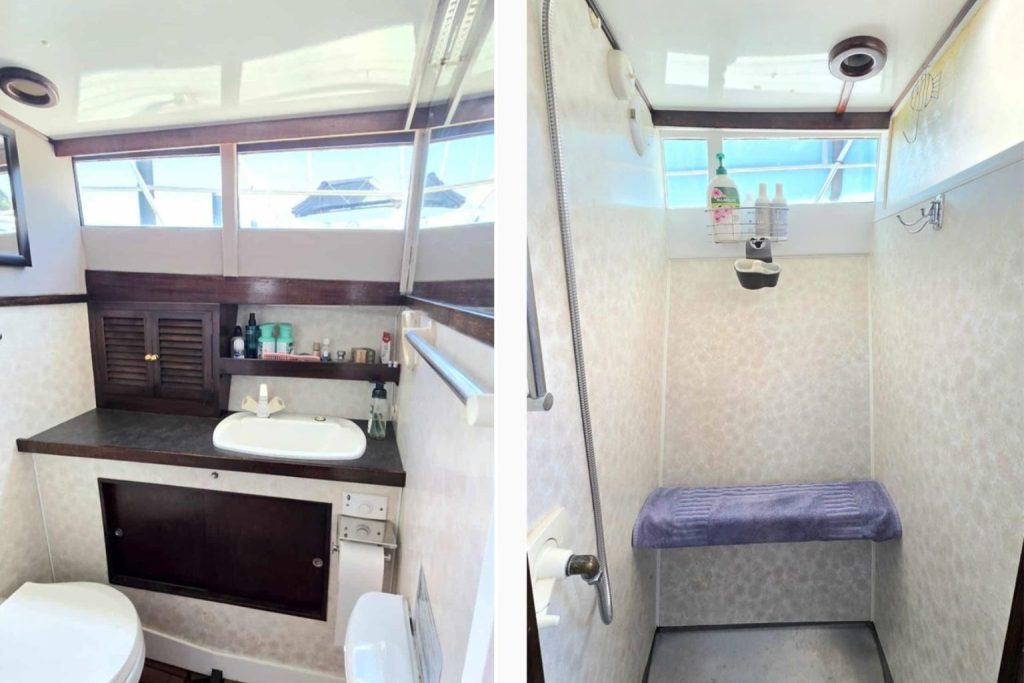
Step inside and the layout remains strikingly modern. The steering position and the galley are on one level and offer sufficient freedom of movement. Light falls through generous windows onto the warm Kauri carpentry. The forward sight lines are clean. The arrangement is suitable for a longer life on board, not just for a weekend.
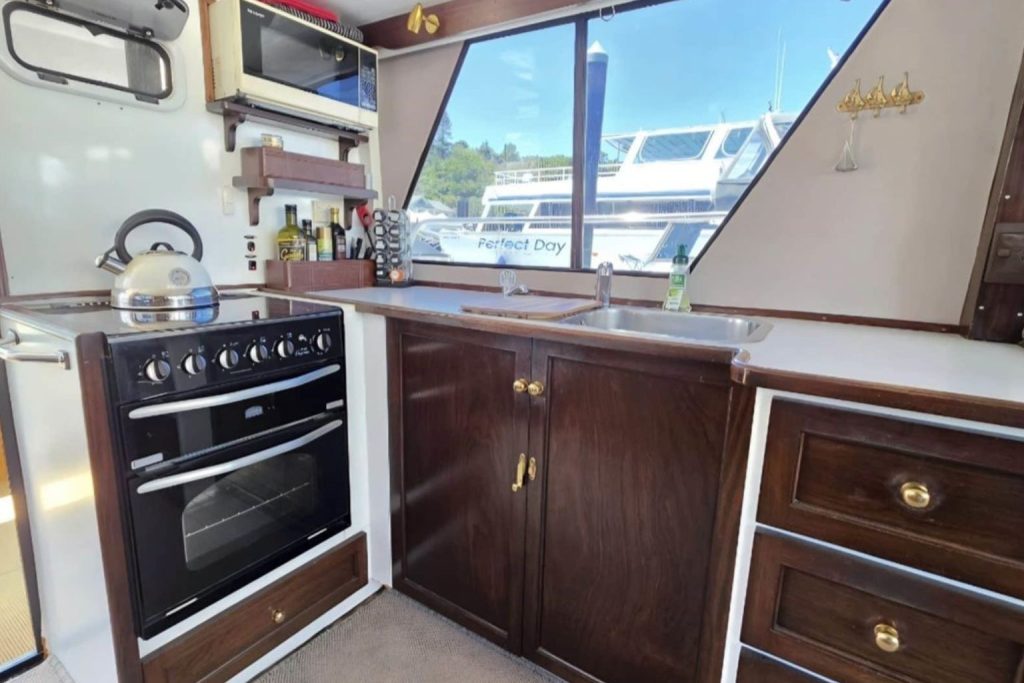
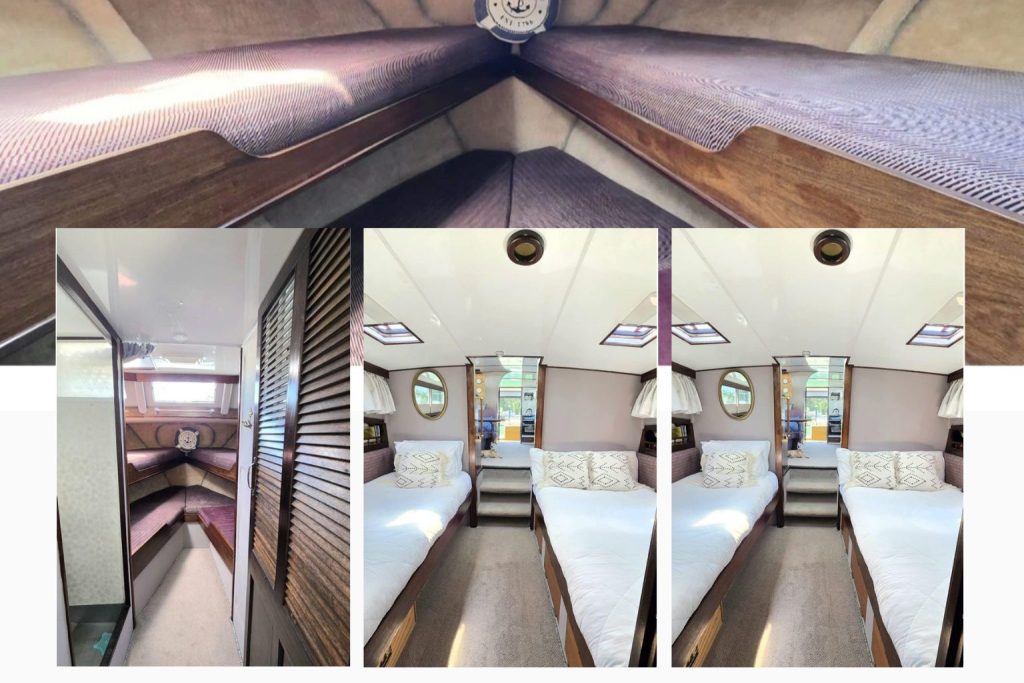
Accommodation follows the same practical logic. Two doppelgangers sit amidships, where the movement remains gentle. The front V-boat offers space for four singles, creating flexible space for family, friends or visitors. It's the kind of layout many New Zealanders associate with much later fiberglass cruisers, but here it is in a 1965 wooden launch.
A real flybridge, years before it became common
Muritais Flybridge secures its place as a design that is ahead of its time. Purposefully designed and usable, it offers excellent visibility into narrow bays, past harbor entrances and through busy anchorages. A full second helm gives the skipper the ability for long coastal passages or maneuvers in tight spaces.
Only a handful of launches from the mid-1960s featured flybridges for this purpose. Smith picked up on the idea early and implemented it well.
A ship that retains the spirit in which it was built
Muritai has benefited from ongoing, meticulous care rather than dramatic renovations. The electrical systems have been kept up to date and new house batteries and a new charger were installed in recent years. A dinghy and outboard motor are available for shore excursions. An inverter and live bait tank reflect the way it is still used today.
This quiet, consistent attention is why she remains such a complete and honest example of mid-century Kauri boatbuilding. Nothing was lost. Nothing was accelerated. She just keeps going.

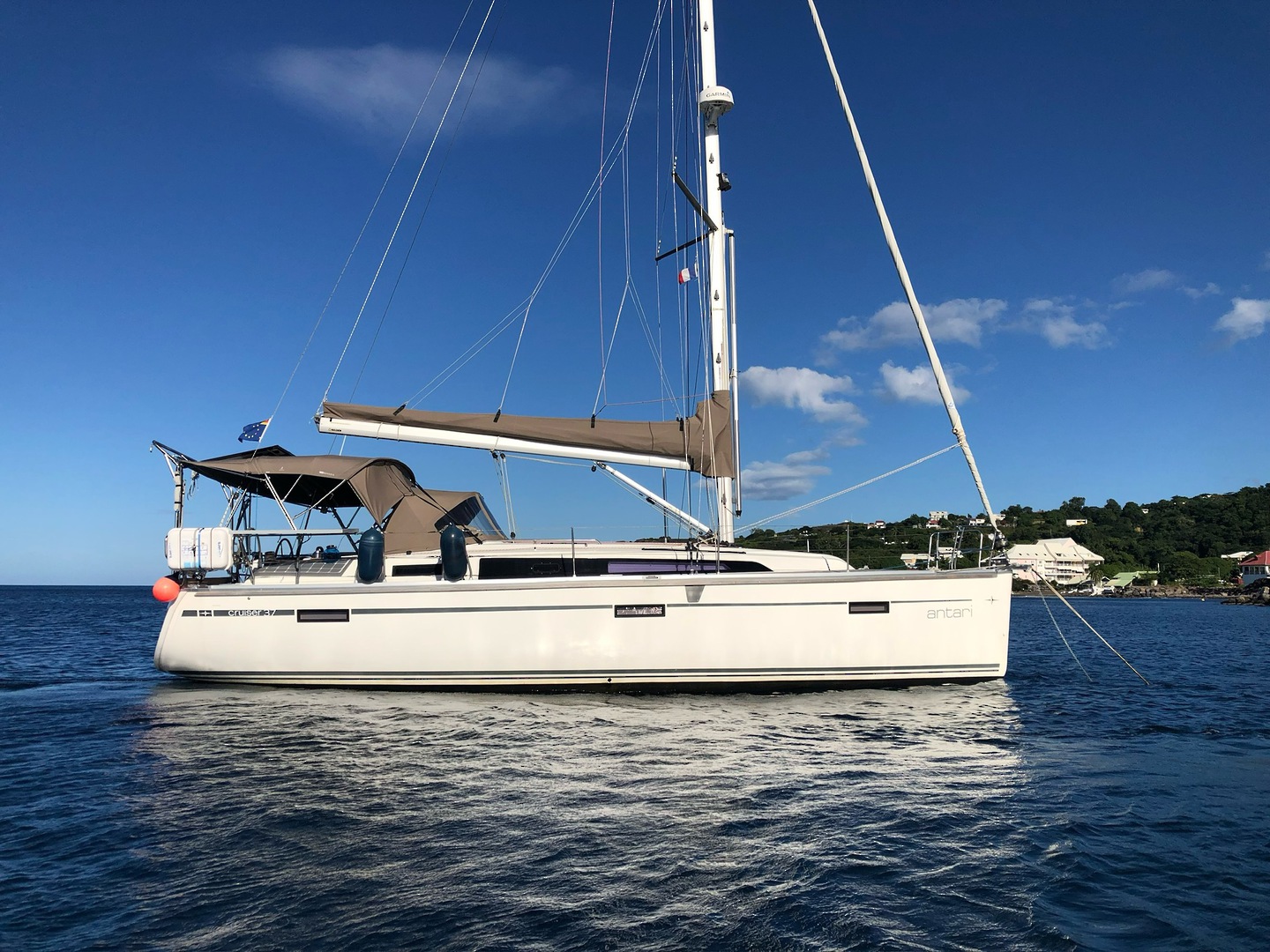
Bavaria 37-2014
250,000 NZD
11.30 m | This beautiful Bavaria Cruiser 37 is a beautiful sailing yacht, well equipped with a spacious interior, two cabins and a light and airy saloon area. View online.
Innovation doesn’t always come with fanfare
Some boats last because they are well built. Others exist because they are well designed. Later has both. She stands at a point in our boating history where tradition and new ideas meet, and she captures that moment with clarity.
Her cockpit flow, saloon layout, accommodation logic and flybridge all point to the direction that New Zealand cruise ships would take in the following decades. It's a living reminder that innovation doesn't always come with fanfare. Sometimes it comes quietly, built in kauri, from a thoughtful farm in Whangarei.
Later: Specifications
Designers and builders
- Claude Allen Smith (Alan Smith), Smith's Boat Yard, Whangarei
year started
construction
- Full length kauri, traditionally built
- Wooden superstructure
- Carvel plank hull
- Wooden joinery throughout
length
configuration
- Flybridge launch with enclosed main helm station
- Large cockpit with outdoor shower and sink
- Single level saloon and galley
Accommodation
- Two double berths amidships
- Four single berths in the front
- Additional sleeping space on the flybridge in firm conditions
Control stations
- Main steering position in the saloon
- Second helm position on the flybridge with a clear view of the coast
machines
- Single diesel inboard engine (period appropriate; model varies depending on ownership history)
- Cruising speed in line with mid-century Northland launches
Systems and equipment
- Home battery bank (recent replacement)
- New charger
- Inverter
- Electric WOF
- Dinghy and outboard motor
- Live bait tank
- Weather curtains for the cockpit fairing
Home waters
- Tutukaka and the Northland Coast
Original purpose
- Coastal cruises, extended family stays and everyday practical use in Northland's bays and harbors
Notable design notes
- Early introduction of a specially towed flybridge, unusual for a mid-sixties launch
- Larger cockpit than typical launches of the time
- Accommodation for comfortable, extended trips
- Salon layout that anticipates later interior and exterior design trends
At the moment for sale via Vinings Marine Group.