For architecture and construction company The Sociable Weaver, sustainability is always a priority.
Environmental responsibility influences every decision – from the building materials used to the construction processes to the way they interact with their customers.
“With each of our projects, our goal and purpose is to demonstrate that a well-designed home is inherently a sustainable home,” says Noa Hackett, architect at The Sociable Weaver.
This values-driven approach was a perfect fit for a young couple in Melbourne's inner west who commissioned the company to create the efficient home they had planned and dreamed of for years.
The client's existing home was located in West Footscray and was a poorly insulated, single storey weatherboard with a compartmentalized floor plan and little connection between indoor and outdoor spaces.
The hope of retrofitting the structure to meet thermal performance standards and the long-term needs of the owners would have required significant intervention.
Instead, Noa says they realized that new construction offered “the best opportunity” to create a home that was both functional and thermally efficient, with a primary focus on passive solar principles – ensuring year-round comfort with very little need for mechanical heating and cooling.
“A simple, considered form with high ceilings, plenty of natural light and a strong connection to the outside world was essential,” explains Noa.
When choosing finishes, the owners asked for “interesting and honest materials,” citing Finnish architect Alvar Aalto’s 1953 Muuratsalo Experimental House as their main inspiration – namely the central courtyard and brick façade.
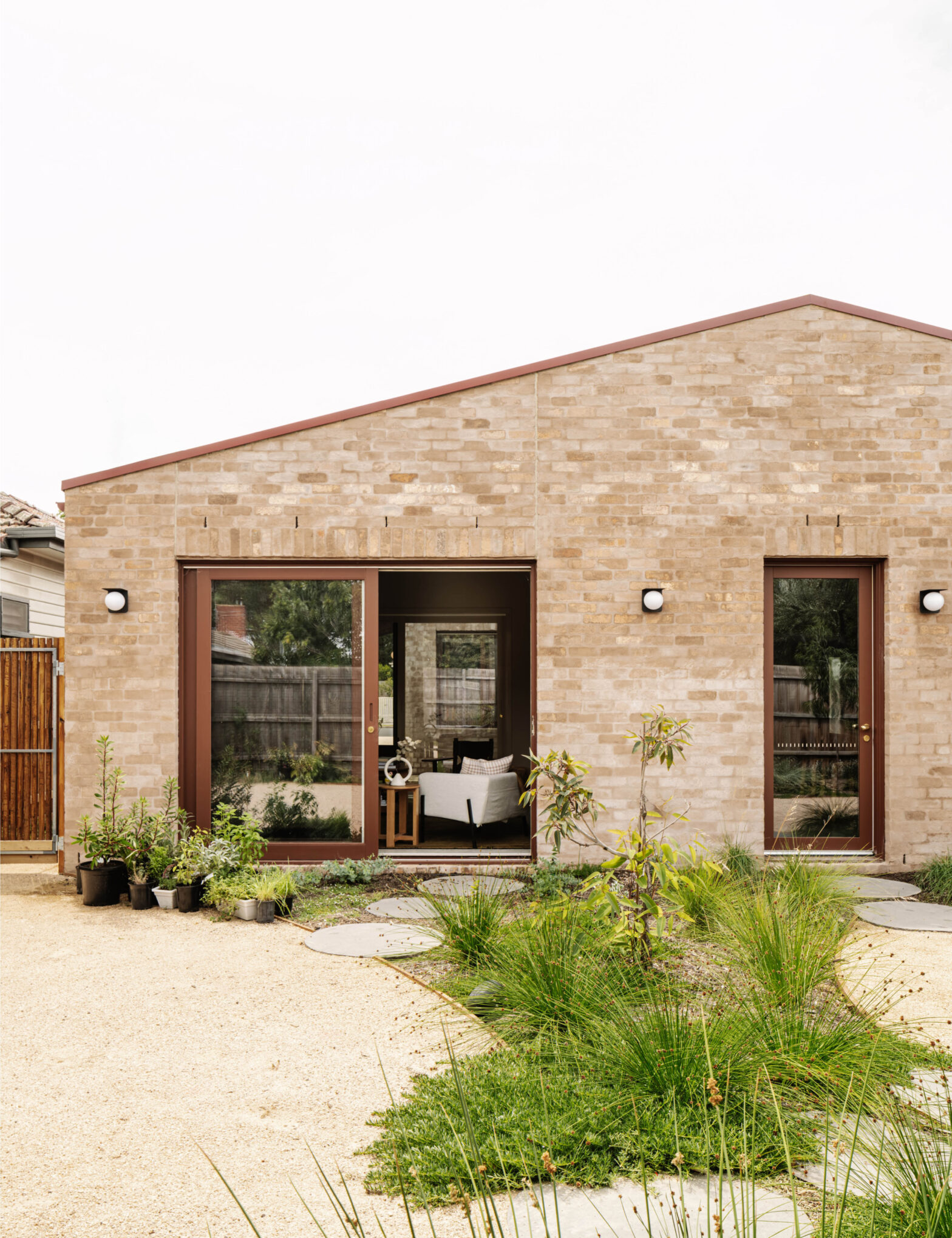
The resulting design sees the house's entrance positioned at the side of the property, where a curved wall opens to reveal the greenery of a central garden.
Recycled bricks were chosen for construction, chosen for their durability and low carbon content.
And just like Alvar Aalto's design, the exterior appears beautifully handcrafted – in this case a packaged plaster mixed with a natural oxide to create a unique textural finish.
The central courtyard shaped the floor plan for two main reasons. Firstly, to ensure privacy from a busy intersection on the street. But more importantly, bringing northern light and warmth to the center of the house.
In winter, the sun hits the concrete slab, which absorbs the heat and slowly releases it again over the course of the day.
“In summer, the pergola along the driveway provides enough protection to keep the interior thermally comfortable,” explains Noa.
She says this U-shaped layout and carefully placed double-glazed windows were also largely the reason for the home's impressive 8.3-star energy efficiency rating – a significant improvement over the NatHERS minimum standard of 7 stars now required for all new homes in Victoria.
High-performance insulation also helps regulate building temperature and a 10.56 kW solar system with battery storage significantly reduces energy consumption from the grid.
Inside there is a modern and playful atmosphere. The burgundy kitchen interior with stainless steel countertops was designed in collaboration with the clients, paying particular attention to how they like to cook, prepare and store their own ferments and beers.
It is a home that is efficient, modest and full of character, which Noa says accurately reflects both the lifestyle and values of the owners.
“Perhaps the biggest takeaway is that sustainable homes don’t have to be extravagant or experimental – they just need to be well-designed, responsive and built to last.”
A version of this story first appeared in Issue 03 of Design Files Magazine. Get your copy here.