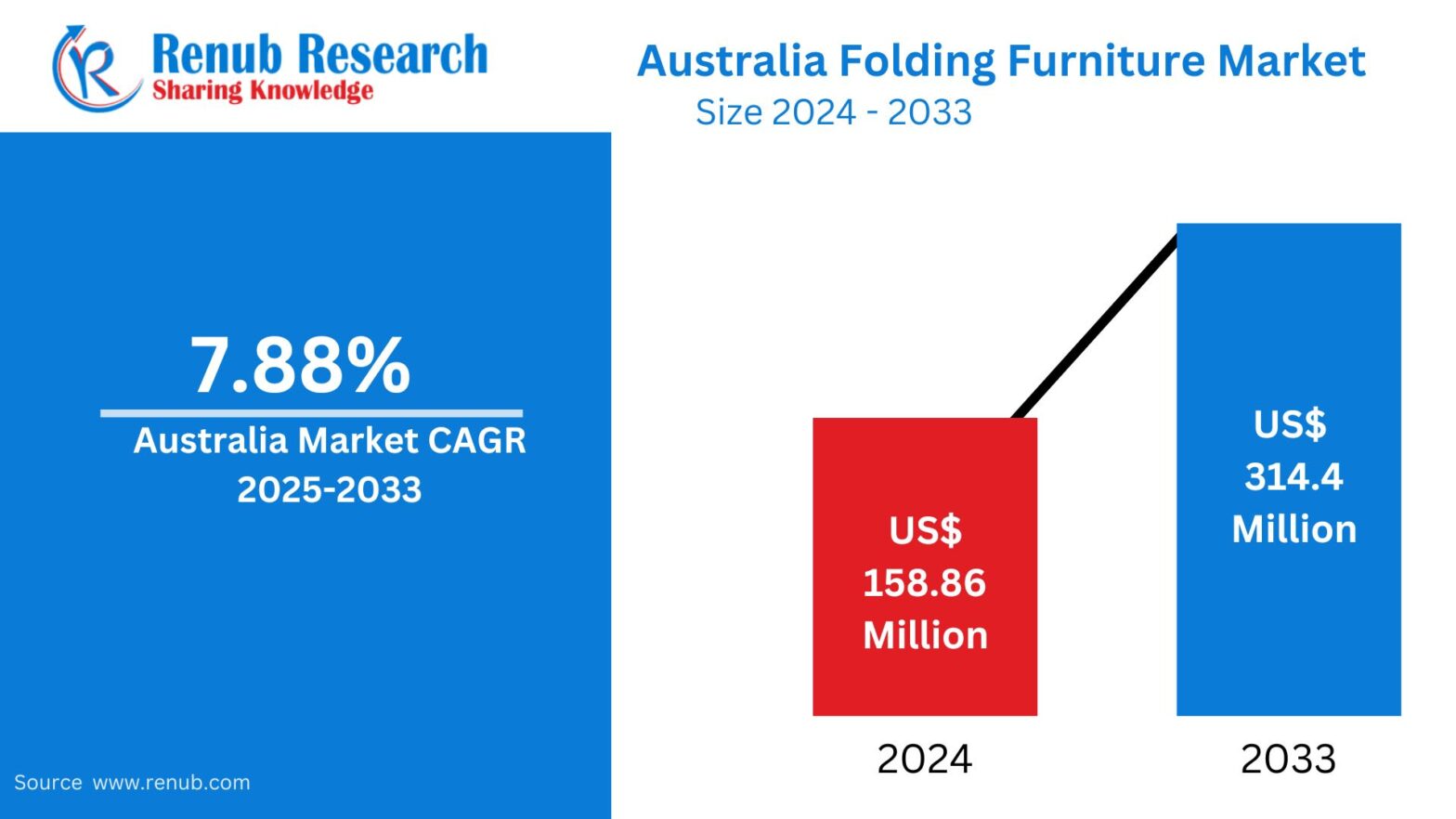
The Australian folding furniture market is undergoing significant change as consumers embrace smarter, more space-efficient living. According to Renub Research, the Australian folding furniture market is expected to reach $314.4 million by 2033, up from $158.86 million in 2024, growing at a CAGR of 7.88% during 2025-2033. This remarkable dynamic is driven by changing lifestyles, increasing urban density, growing sustainability awareness and the nationwide trend towards multifunctional home and work furniture.
As Australian homes – particularly in major cities – become more compact, consumers are increasingly gravitating towards innovative, portable and aesthetically designed foldable furniture to suit modern living. From convertible beds to folding desks to collapsible outdoor sets, folding furniture has evolved from simple everyday items to stylish essentials that integrate seamlessly into modern interiors.
Download the free sample report
Overview of the Australian folding furniture market
Folding furniture has gradually evolved from a niche category to a core part of modern Australian homes. The rise of urban living, work-from-home culture and design-conscious consumers has increased the demand for products that are not only functional but also stylish and durable.
Today, more and more Australians value multifunctionality and space efficiency, particularly in apartments and townhouses where every square meter counts. Furniture that can transform a living room into a workspace – or a bedroom into an entertainment area – is becoming increasingly popular.
The manufacturers have reacted accordingly:
Introducing elegant, modern folding furniture that fits into modern interiors
Design mechanism-driven, easy-to-use structures
Adding multi-purpose features such as hidden storage, modular parts and lightweight materials
Investing in sustainable materials, including recycled wood, eco-fibers and recyclable metals
E-commerce has significantly accelerated market presence. Online retail allows consumers to explore different options, compare designs, view durability ratings and enjoy delivery straight to their doorstep – benefits that are particularly important in a market where convenience drives purchase decisions.
As Australia becomes more urban and living environments evolve into smarter, more flexible spaces, folding furniture is expected to play an even greater role in redefining the way Australians live and work.
Key factors driving the growth of the Australian folding furniture market
1. Increasing urbanization and space limitations
Australia's largest cities – particularly Sydney, Melbourne, Brisbane and Perth – are experiencing rapid increases in urban populations. Apartment-style living is now the norm for young professionals, small families and students. As the average living space shrinks, residents are looking for furniture that offers maximum functionality without taking up permanent space.
Folding furniture perfectly meets this requirement by providing:
Easy storage
portability
Rapid transformation of spaces
Space optimization in small rooms
For city dwellers who frequently change residence for rent or work, lightweight folding furniture reduces both the stress and costs of moving. This trend will continue as cities continue to densify as part of Australia's long-term urban development strategy.
2. Changing lifestyles and expanding work from home
Since the pandemic, remote and hybrid working models have become firmly embedded in Australian work culture. Even after offices reopen, many households will have their own work areas.
The demand has increased sharply for:
Foldable desks
Foldable chairs
Portable laptop tables
Space-saving ergonomic furniture
These solutions allow consumers to quickly convert living rooms, bedrooms and dining areas into home offices – and fold everything up when the work is done.
Beyond work, lifestyle changes are shaping consumer expectations. Australians are increasingly hosting social gatherings, pursuing hobbies at home and maintaining a flexible lifestyle. Folding furniture allows for seamless transitions between different activities at home.
3. Increasing sustainability awareness
Environmentally conscious living plays a crucial role in shaping Australia's furniture preferences. Consumers increasingly prefer:
Recycled materials
Low-waste manufacturing processes
Recyclable components
Sustainable wood and eco-textiles
In response, folding furniture manufacturers are using sustainable materials such as bamboo, FSC-certified wood and recyclable aluminum. Australia's commitment to reducing carbon emissions complements this and encourages brands to innovate and adopt greener supply chain models.
Sustainability has become a competitive advantage, pushing companies to develop eco-friendly product lines that offer longevity without compromising environmental responsibility.
Challenges for the market
1. Fragmented competitive landscape
The Australian folding furniture market offers a mix of:
Local manufacturers
International brands
Private label company
Regional craftsmen
While global brands such as IKEA are affordable and appeal to the mass market, local brands often appeal to consumers seeking premium craftsmanship or products tailored to Australian tastes.
This fragmented structure increases competition and forces companies to invest in:
Brand visibility
Customer loyalty
Online presence
Customer service
Customizable designs
Maintaining market share becomes challenging as consumers weigh factors such as price, durability and aesthetics.
2. Balance between functionality and design
The key challenge in making folding furniture is to balance:
durability
Lightweight construction
portability
Aesthetic appeal
Ease of use
Producing furniture that is both sturdy and visually appealing without appearing bulky requires sophisticated engineering. Adding multifunctional features – such as storage compartments or convertible components – requires precise design, which increases manufacturing complexity and cost.
Despite advances, achieving the perfect blend of form and function remains a major hurdle for manufacturers.
Folding furniture market overview in Australia by state
New South Wales
New South Wales (NSW) is leading the folding furniture market, driven by high residential density in Sydney and Newcastle. The combination of rising rents, smaller apartments and widespread remote work makes folding furniture particularly popular.
The trend towards eco-friendly furniture is strong in NSW, with consumers looking for sustainably sourced products. Both local retailers and global brands have a strong presence here.
Victoria
Victoria – particularly Melbourne – is another region with high demand. Its urban lifestyle, compact living spaces and design-focused consumer base drive sales of:
Folding tables
Sofa beds
Modular furniture
Collapsible patio sets
Victoria also has a strong e-commerce presence, offering buyers extensive digital catalogs at all price points.
Queensland
Demand for folding furniture in Queensland is driven by:
Rapid urbanization
Lifestyle changes
Renovation trends
Outdoor culture
Since Queenslanders spend a lot of time outdoors, folding patio furniture, folding lounges and portable dining sets are particularly suitable.
Cities such as Brisbane, Gold Coast and Sunshine Coast serve as key hotspots for market expansion.
Market segmentation
By type
Chairs
tables
Sofas
beds
Other
On request
Reside
Commercially
By sales channel
Supermarkets and hypermarkets
Specialty stores
E-commerce
Other
By material
metal
Wood
plastic
Glass
Other
By geography (states)
New South Wales
Victoria
Queensland
Western Australia
South Australia
Australian Capital Territory
Tasmania
Northern Territory
Large companies covered
Each company includes: overview, key people, current developments, SWOT analysis, sales analysis
Flexsteel Industries
Dorel Industries
Lifelong brands
Home Depot
Bassett Furniture Industries
La-Z-Boy
Leggett & Platt
Haverty Furniture
Hooker furniture
IKEA
These companies collectively shape market dynamics through product innovation, customer loyalty, design improvement and sustainability initiatives.
Final thoughts
The Australian folding furniture market is entering an exciting period of growth as consumers adopt modern, sustainable and space-saving living habits. Urbanization, lifestyle changes and a widespread remote work culture are creating a landscape where folding furniture is no longer an optional addition but a fundamental part of home design.
With the market expected to reach $314.4 million by 2033, manufacturers and retailers are on the cusp of significant opportunity. Innovation, design excellence and sustainability will be the key drivers for the next generation of folding furniture in Australia.
Whether in compact apartments, cozy homes, shared spaces or outdoors, folding furniture will redefine the way Australians organize, decorate and experience their living spaces for years to come.