
For a long time, the architectural world seemed convinced that the only way to give a building a healthy look was to cover it with real plants. The star of healthy architecture was the living building. The Bosco Verticale in Milan was proof that we can graft a forest onto a tower. New York's High line transformed a forgotten railway line into a floating garden that somehow feels more alive than many traditional parks.
And other cities followed with their own experiments. Seoul turned an old highway into Seoullo 7017an urban arboretum. Paris unveiled rewilding plans Champs-Élysées. But this obsession with green isn't just changing our skylines… it's helping us reimagine our homes and driving recovery Japanese interior design and help redefine architecture in 2026.
RELATED: The Hidden Sources of Inflammation in Your Home—and the Quick Fixes That Can Actually Help
People feel better when their surroundings feel alive, but most homes, schools and offices can't behave like open-air parks or multi-billion dollar development projects. How can we convey this feeling in everyday interiors? Well, maybe we just have to fake it.
The future of wellness design may no longer involve allowing nature to grow indoors. Maybe it's a matter of simulating it so convincingly that our nervous system reacts in the same way. Modern millA sustainable building materials company known for developing next-generation wood alternatives from recycled agricultural byproducts suggests in a new white paper that perhaps the next era of biophilic design The point is not to install nature indoors, but to simulate it in a way that the body perceives as real relief.
RELATED: Why is everyone talking about biophilic design?
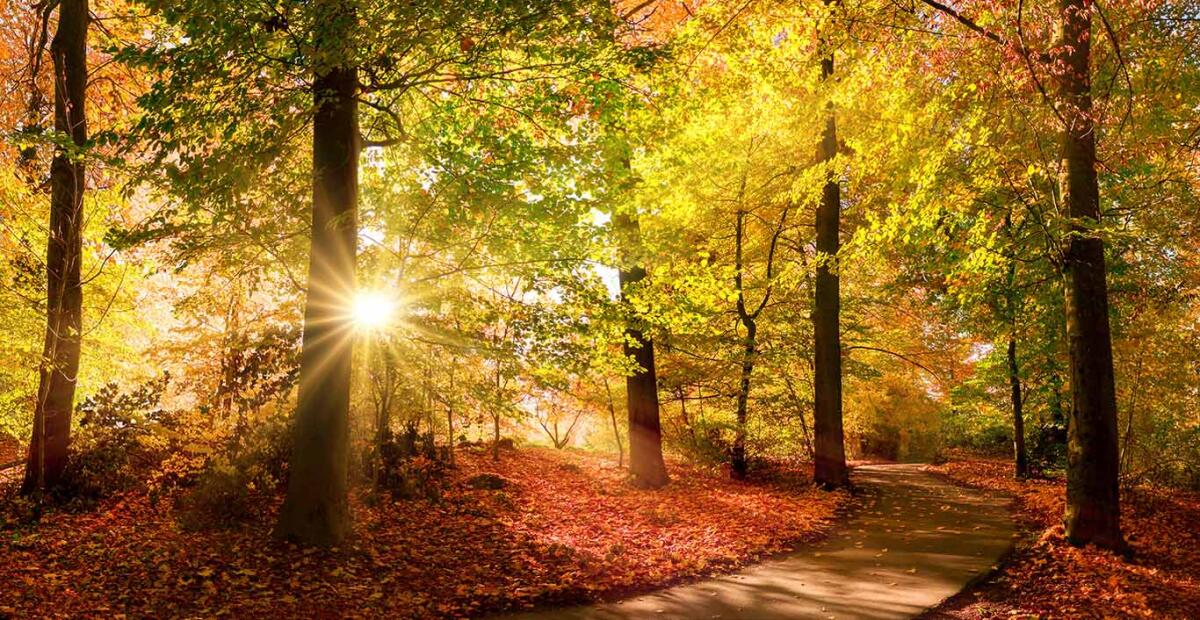
How the Brain Interprets Nature (Even When It's Not There)
The body responds to nature because it always has. Nevertheless, the White Paper emphasizes that our physiology is not tied to plants. It explains that biophilia is “the human innate tendency to connect with nature, which continues to be crucial to people’s physical and mental health and well-being in the modern world.”
What surprises people is how quickly the brain accepts proxies for reality. The article points to research showing that the nervous system can interpret certain signals as “nature,” even when the environment is artificial.
For example:
- “Half an hour relaxing indoors in a simulated natural environment reduces stress just as much as spending the same amount of time outside in nature.”
- Landscape posters can “reduce stress and anger levels” among office workers.
- Nature sounds help people “recover from psychological stress.”
- Virtual forests create restorative effects “similar to a natural environment,” even if the trees only exist as pixels.
- Images of water can be more calming than an actual outside view if the real scene lacks this elementary clue.
It is not that the mind is naive. It simply responds to familiar sensory signals. When the light, texture, or pattern resembles what the body has trusted for thousands of years, reaction comes before logic.
RELATED: Why builders are swapping lumber for rice husk boards
What's hot in home design and decor
Why true biophilic icons are difficult to reproduce
The problem is not that buildings like Bosco Verticale are too beautiful to imitate. The reason for this is that they rely on levels of technology and maintenance that most places simply cannot support. The white paper describes the project as “an exceptional engineering, horticultural and forestry achievement”. The trees were selected “story by story and side by side,” adapting to sunlight, wind, humidity and seasonal behavior. The team tested the stability of mature trees, installed “a solar pump” to power a custom irrigation system, and scheduled “quarterly pruning” to keep everything alive. Even the floor had to be reformulated to reduce weight, which meant the carbon footprint of each added material had to be taken into account.
The paper doesn't sugarcoat the snack. “Size is the Achilles heel of biophilic design.” Most environments simply cannot handle the complexity or cost that these game-changing projects require. A typical apartment building cannot manage an elevated forest. A public school cannot maintain a tree canopy. Clinics, offices, and everyday homes require approaches that do not require irrigation systems, structural reinforcement, or landscaping teams.
For this reason, the discussion about biophilic design is changing. If nature-inspired spaces are to benefit everyone, they must be viable in the places where people actually live and work.
RELATED: City Glow Meets Cottage Flow: The Dual Aesthetic That Defines Home Design in 2026
The latest on non-toxic, food-safe options for kids' rooms

A new way to design inspired by nature
When biophilia shifts from literal nature to the qualities that make nature feel restorative, the possibilities multiply. The white paper explains that indirect sensory stimuli and materials that behave like natural elements are also considered biophilic. It states that biophilic design includes both “direct and indirect experiences with nature” and that images, patterns and textures can be effective when they “evoke aspects of the natural world that have shaped our development.”
This opens the door to environments that feel grounded without the need for soil, plumbing, or structural reinforcement. A room without windows can still have a believable view. A hallway can feel less like a corridor and more like a moment to breathe. Even a digital skylight that changes throughout the day can provide a sense of rhythm that the body immediately recognizes.
RELATED: Rugs That Instantly Transform a Room
The Material Shift designers talk about it all the time
The potential of rice husk wood alternatives is something builders are currently exploring, saying they offer “the grain, texture and warmth of wood” without the usual problems like rot or splintering. The real surprise is how convincing they seem.
If you've ever touched older faux woods, you know why this is important. These materials often “feel cold and plasticy,” which immediately breaks the magic. Rice husk boards avoid this problem because they are constructed to match the tactile properties that make real wood feel so grounding in the first place.
RELATED: The Invisible Design Problem That's Making You Sick and How to Protect Your Home
How these ideas are expressed in real spaces
The true power of simulated nature is how easily it nests in places where full-fledged biophilic design simply cannot exist. The white paper encourages designers to stop thinking of nature-inspired elements as decorative additions and instead integrate them into the spaces people use every day. What is required are materials that “can be used generously in a built environment” and not reserved for executive suites, as well as surfaces that are durable enough “to withstand heavy use and daily use for extended periods of time.”
When you apply this thinking to real spaces, the possibilities seem surprisingly practical. Imagine a recovery room deep inside a hospital, a space that never receives natural light but still offers patients something soft to rest their eyes on through a virtual window. Or a school hallway that no longer sounds like a tunnel because the surfaces absorb sound the same way natural outdoor environments do.
RELATED: Why designers are calling layered lighting the winter upgrade every home needs
In some housing developments, rice husk cladding adds warmth to buildings that were originally designed for efficiency rather than comfort. Offices become less hectic when hard, reflective materials are replaced with textures that are instinctively softer. Even a small apartment between two buildings can feel more human when a digital skylight signals the beginning of a new day.
None of these interventions attempt to replace nature. They simply allow the influence to reach the areas that have always been left out of the conversation.
RELATED: Your minimalist home doesn't have to feel cold
Why this direction is important
Simulated nature can help create spaces that are “better for people, better for society and better for the planet,” explains Modern Mill. The idea is not to compete with iconic projects. It's about spreading the benefits of biophilia more widely.
Simulated nature will never replace a real forest, but it can do something different. This allows the feeling of nature to reach people who may not have the luxury of proximity, budget or ideal architecture.